
Do Gutter Guards Actually Work?
What gutter guards genuinely help with, what they do not solve, and why guarded gutters still need to be cleaned.
Gutter guards — screens, micro-mesh, surface-tension covers, foam inserts, and brush inserts — are one of the most common upgrades homeowners make to their gutters. The sales pitch is usually some version of “never clean your gutters again.” The honest answer is more nuanced: good guards, installed correctly, reduce how often and how badly your gutters clog. They do not make your gutters maintenance-free, and they change the type of maintenance your home needs rather than eliminating it.
The proof: plants growing out of guarded gutters
These photos were taken on real Metro Atlanta homes. Both have gutter guards installed. Both have live seedlings — maple, pine, and ivy — rooted in the debris sitting on top of and inside the guards.
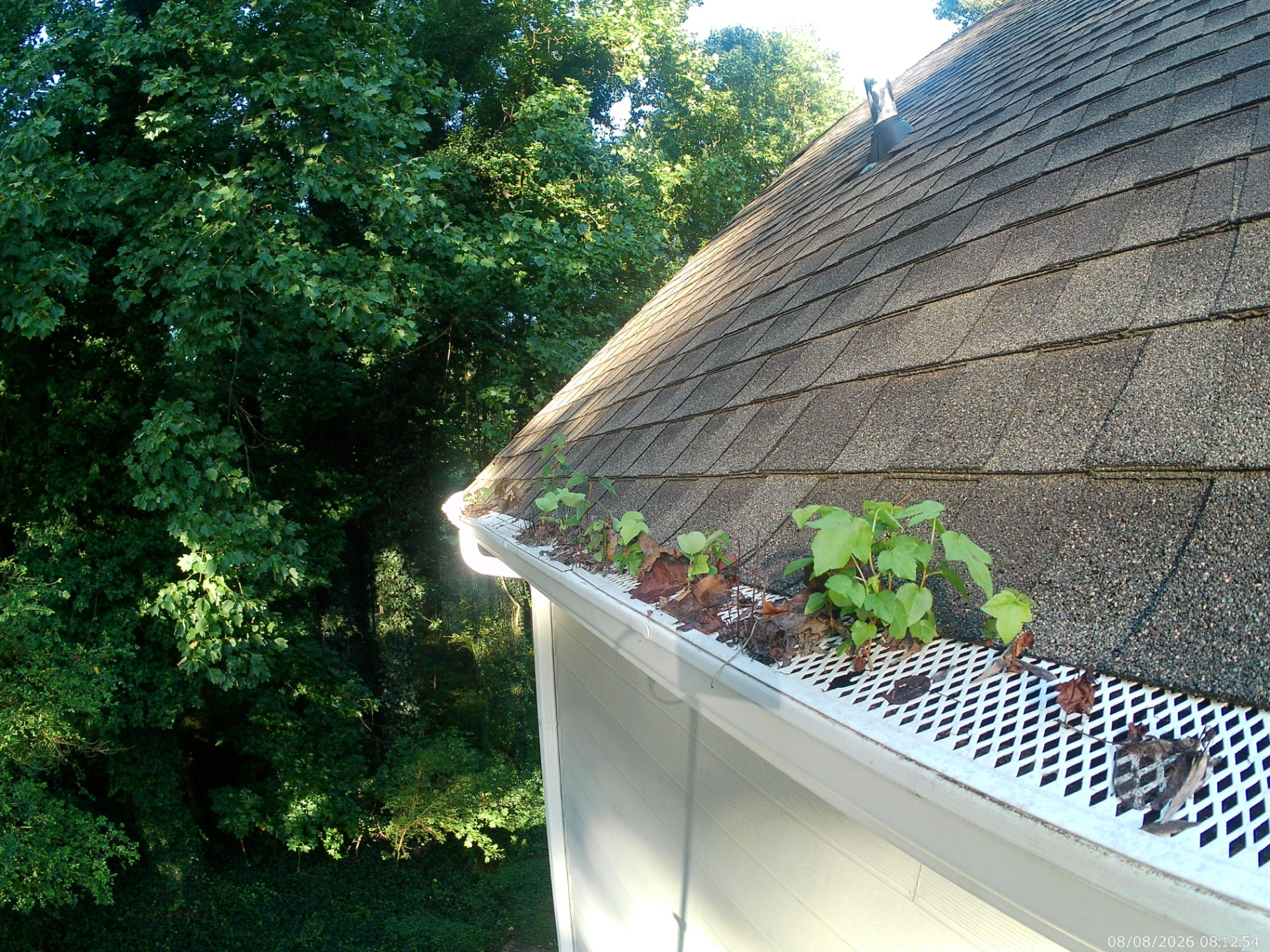
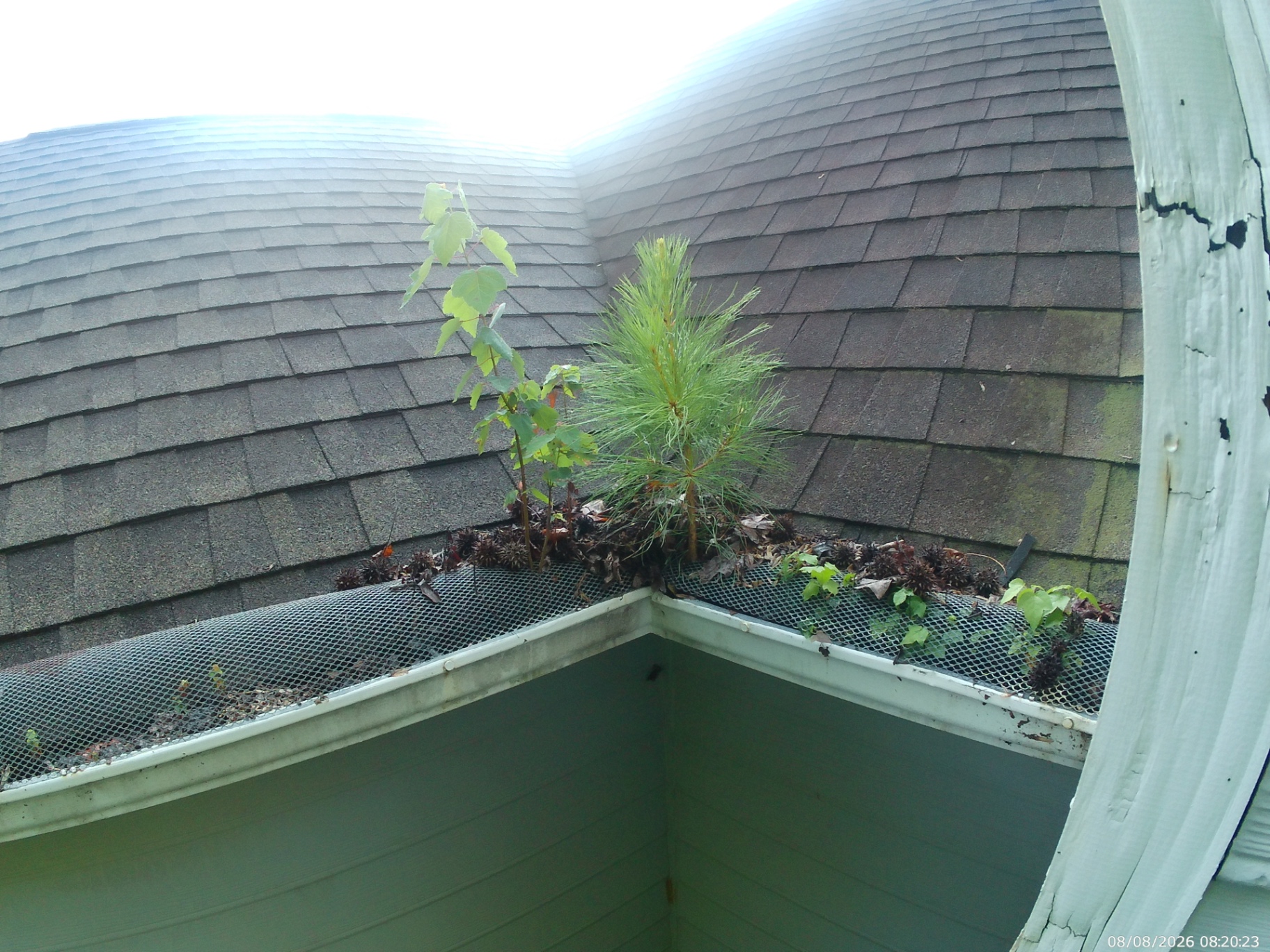
A plant cannot grow without soil, moisture, and time. If a seedling is thriving on your gutter guard, it is telling you that fine material has been accumulating there undisturbed for a long while — and that water is not moving through the way it should.
Where gutter guards genuinely help
Good use cases
- Heavy tree cover. Homes under oaks, maples, or pines can fill a gutter with whole leaves and needles in a single season. Guards keep the bulk of that out of the trough.
- Downspout protection. The most damaging clogs are usually in the downspout, not the trough. Guards dramatically reduce the amount of large debris that can pack into an outlet.
- Steep or hard-to-access roofs. If cleaning your gutters is genuinely dangerous or expensive, stretching the interval between cleanings has real value.
- Nesting and pests. Solid covers and fine mesh make it much harder for birds, squirrels, and wasps to build in an open trough.
- Ice and fire considerations. Metal guards keep dry, ignitable debris out of the trough, which matters where ember exposure is a concern, and they reduce the debris dams that contribute to winter ice buildup.
What guards do not fix
- Fine material still gets in. Shingle grit, pollen, roof dust, seed pods, and shredded leaf matter pass through or settle on nearly every guard design and build up as a mud layer in the bottom of the trough.
- Debris on top becomes a mat. Wet leaves that sit on a screen decompose into a felt-like layer that sheds water over the front lip instead of into the gutter.
- Valleys and inside corners overload. Roof valleys concentrate runoff and debris at one point, which is exactly where guards get overwhelmed first.
- Access gets harder. Once a guard is installed, cleaning the trough properly means removing and reinstalling sections — which is why guarded gutters are often skipped for years.
- Poor installation causes new problems. Guards fastened under the shingles can void roofing warranties, and covers pitched wrong can send water behind the gutter or over it entirely.
The big misconception: “I have guards, so I never have to clean”
This is the single most expensive assumption homeowners make about their gutters. Guards filter debris; they do not remove it. Everything the guard stops has to go somewhere, and unless wind and rain happen to sweep it off the roof edge, it stays right there on top of the guard.
Meanwhile, the material that does get through is the material a guard is least able to stop. Asphalt shingles shed mineral grit for their entire service life — heavily in the first few years and again as they age. That grit is sand, and it washes straight through mesh and screening. Mixed with pollen, roof dust, and broken-down leaf particles, it forms a dense sediment layer in the bottom of the trough. That layer:
- Reduces the usable depth of the gutter, so it overflows in heavy rain even though it looks empty from the ground.
- Holds moisture against the aluminum and the seams, accelerating corrosion and seam failure.
- Adds real weight — wet sediment plus a soaked debris mat can be many pounds per foot, pulling hangers loose and causing sag.
- Becomes potting soil. This is exactly how the seedlings in the photos above got started.
Gutters exist to move water away from your foundation. When flow is obstructed — whether by a mat on top or sediment underneath — water spills at the roof edge, saturates the soil next to the house, splashes siding and trim, and can back up under the shingles at the eave. None of that is prevented by a guard.
How often should guarded gutters be serviced?
For most homes with guards, an inspection and cleaning once a year is a reasonable baseline, and twice a year if you have heavy tree cover, pines, or roof valleys that collect debris. Without guards, twice a year is typical and three or four times a year is common under heavy canopy. The point of guards is to reduce frequency and severity — not to remove gutters from your maintenance list.
Warning signs that guarded gutters need attention now: water sheeting over the front edge during rain, staining or drip marks on the fascia, visible debris piled on top of the guard, sagging sections, mulch or soil eroded in a line beneath the gutter, or — most obviously — anything green growing out of the roof edge.
If you are considering gutter guards
- Match the guard to your trees. Pine needles and seed pods need finer mesh than broad leaves. A screen that stops oak leaves will let needles through and then trap them edge-on.
- Prefer removable, screw-in designs. Guards that can be taken off and put back cleanly keep future cleaning practical and affordable.
- Avoid anything installed under the shingles. Lifting shingle courses to slide a cover in is a roofing risk and a warranty question.
- Be skeptical of foam and brush inserts. They fill the trough, collect fine debris internally, and are the hardest style to clean well.
- Fix the gutter first. Guards installed over sagging, leaking, or improperly pitched gutters lock the problem in place and make it harder to reach.
- Read the “lifetime” language carefully. Most no-clog guarantees still require periodic cleaning by the homeowner or the installer to remain valid.
The bottom line
Gutter guards work — at the job they are actually designed to do. They keep leaves and large debris out of the trough and out of your downspouts, and on the right home they meaningfully reduce how often gutters clog. What they do not do is stop shingle grit and dirt from settling in the bottom of the gutter, keep a wet debris mat from forming on top, or eliminate the need for someone to look at and clear your gutters on a regular schedule. If plants can grow up there, water can be blocked up there.